

As I slam the car door, I am welcomed by a swarm of small insects, hovering in the shadow side of the tree where I parked. I imagined collecting my things slowly, but the insects are already testing my blood type on my arms and neck. I don't want to stay too long to find out if they like it.
I rush into the open and head towards the gates to Jægersborg Deer Garden. My usual style of wildlife photography is alone in the forest, but here I am met with dog walkers, families strolling, a child's birthday party, groups of tourists, and other photographers. Maybe this was a mistake?
The deer-to-human ratio is around 1:1, it seems. I hope that the crowds will thin out the closer we get to dinner time. At least the mosquito-to-human ratio is improved with more victims to prey on.
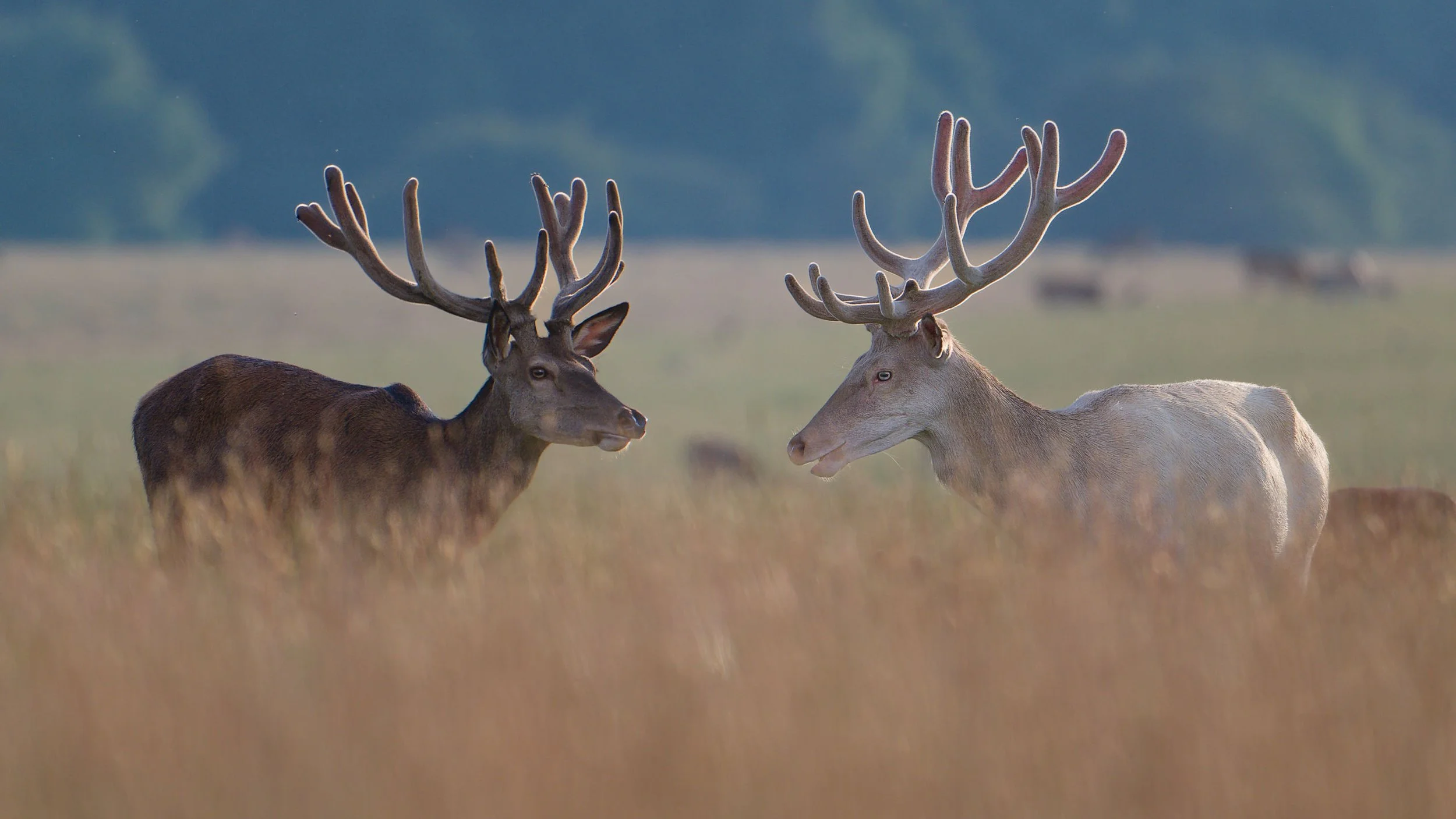
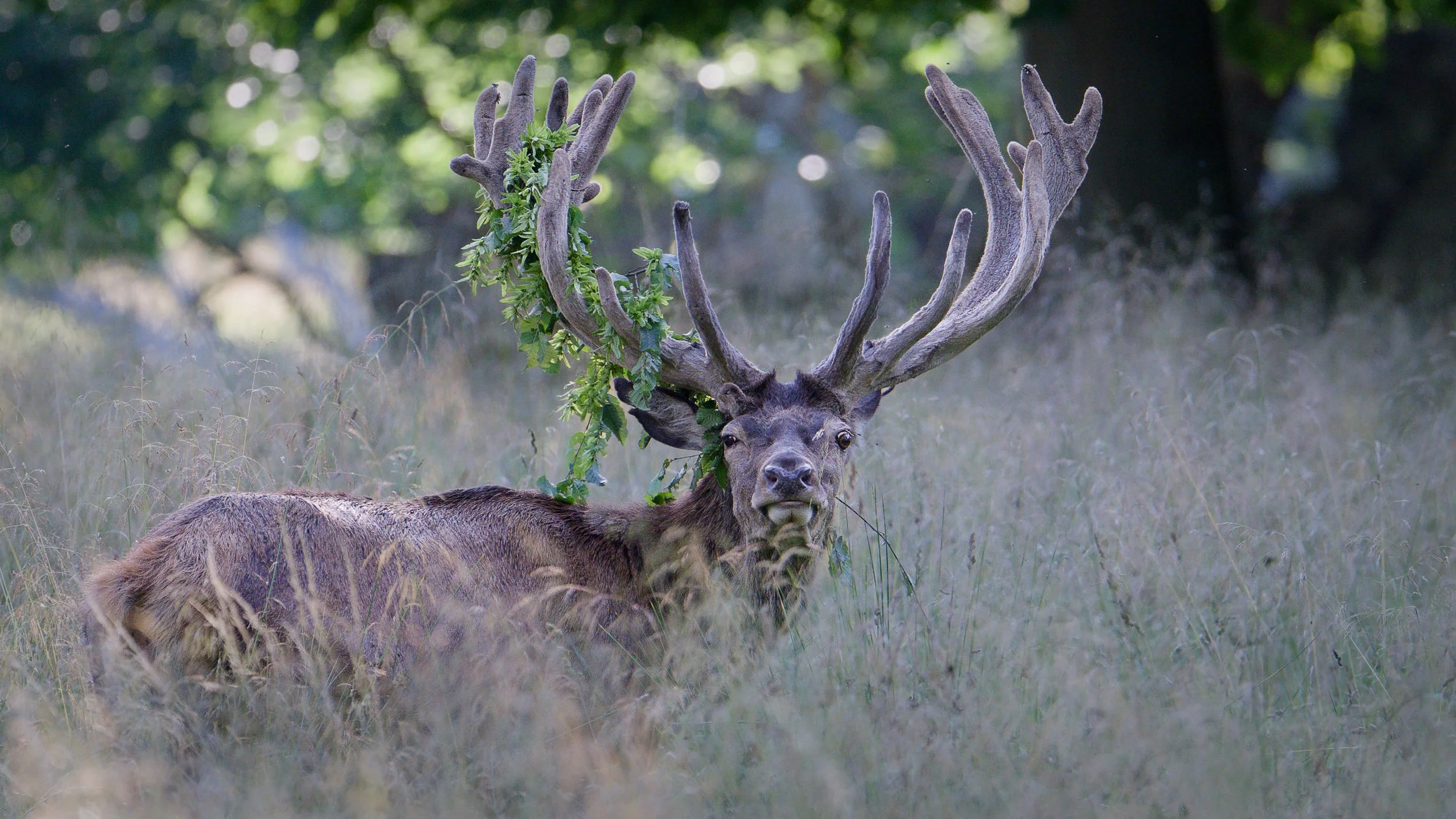
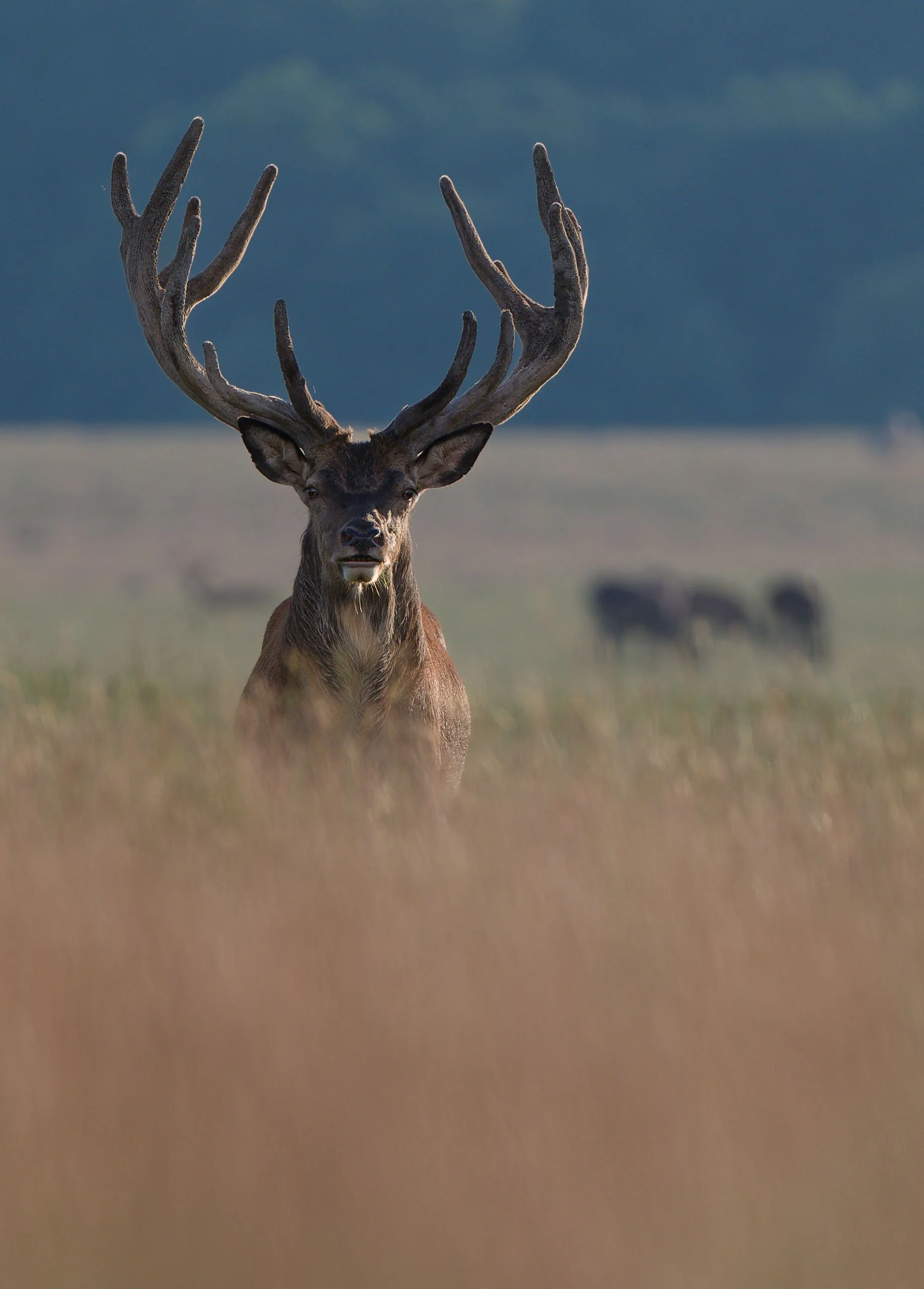
The forecast seems to hold up, giving me hope of capturing backlit shots of either red deer or fallow deer in the August evening sun. The antlers are almost fully re-grown at this time of year, but they still have the fuzzy velvet-like cover before they are fully calcified and ready for the rut in fall.
As the sun dips closer to the horizon and just before the golden hour begins, the crowds retire from the park, but the mosquitoes are still exploring my ears, judging from the constant humming, and the urge to fend them off. They no longer stay in the safety of the shade and move into the open, leaving me nowhere to hide.
I just have to accept them.
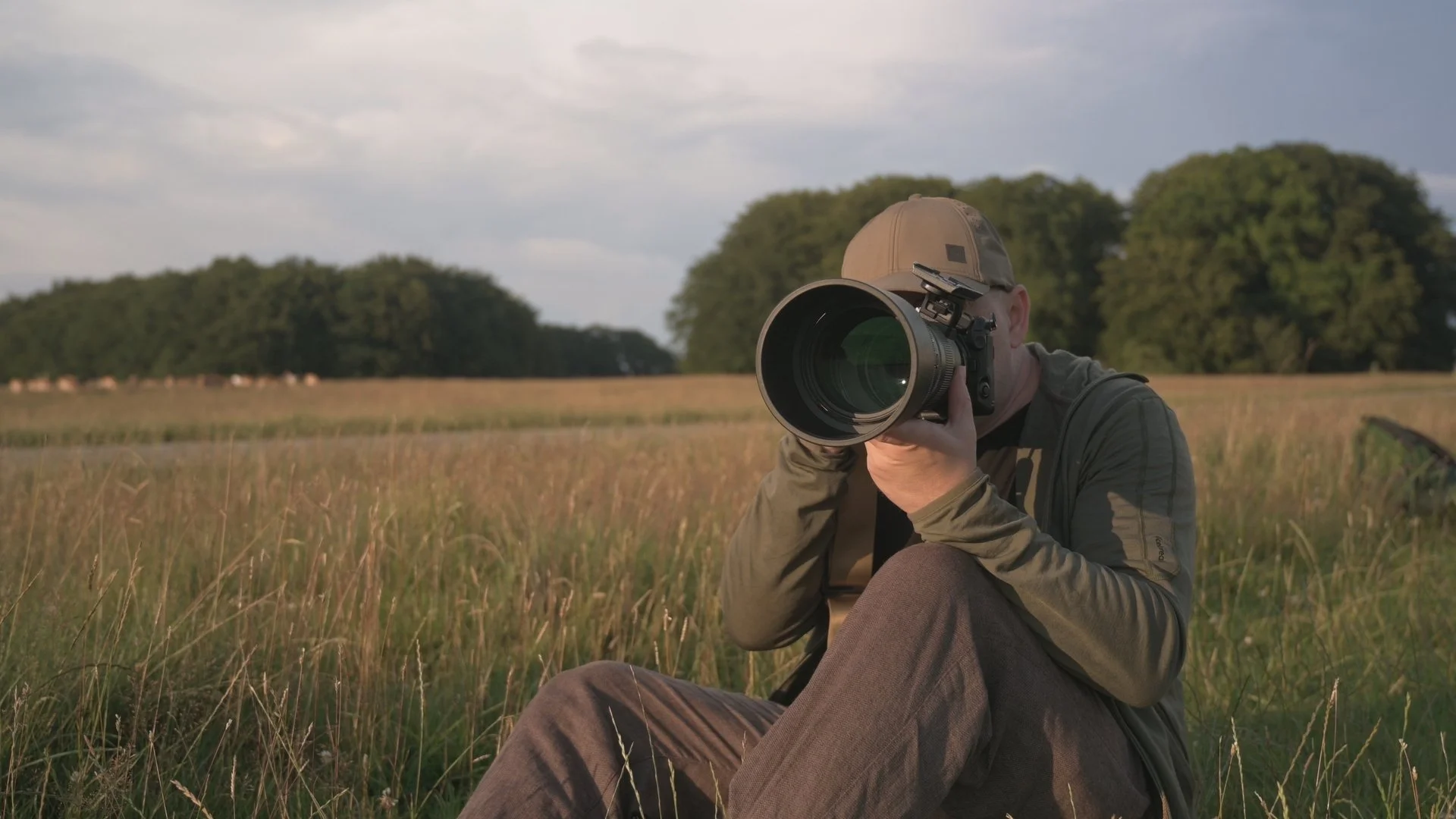
I unzip the bag and reach for my camera (Nikon Z8) and the attached 400mm lens, and start to think about the sun’s path across the cloudless sky.
A group of male fallow deer is relaxing in the middle of the meadow.
I slowly step off the path and into the meadow, keeping my distance. I fixed my eyes on the white-furred one, which is the one closest to me. I am almost at the right angle for backlit shots. I sit down in the tall sun-burnt grass and let the deer get used to my presence. Time to take a couple of safe shots.
10 minutes later, I move slowly 5 meters closer without looking directly at the deer. The white fallow stag is still just resting, not taking much notice of me. I know this wouldn't be possible anywhere else than in a deer park, where animals are habituated to people. They are not tame, but not wild either. 5 meters more, and I am in the spot where I don't think I can get closer without breaching their comfort zone.
I am far enough away from the park roads to stop noticing the dog walkers, the few tourists, occasional laughs from friends enjoying a glass of wine on the stairs of the Hermitage Palace, and the sound of wheels on gravel from bicyclists using the park as a shortcut. Occationally I see a few people pointing in my direction.
I can't hear what they are saying, so even though it is not the silence I am used to, or the thrill of being unnoticed by the deers it is good enough for me to feel that I have my own space for photography.
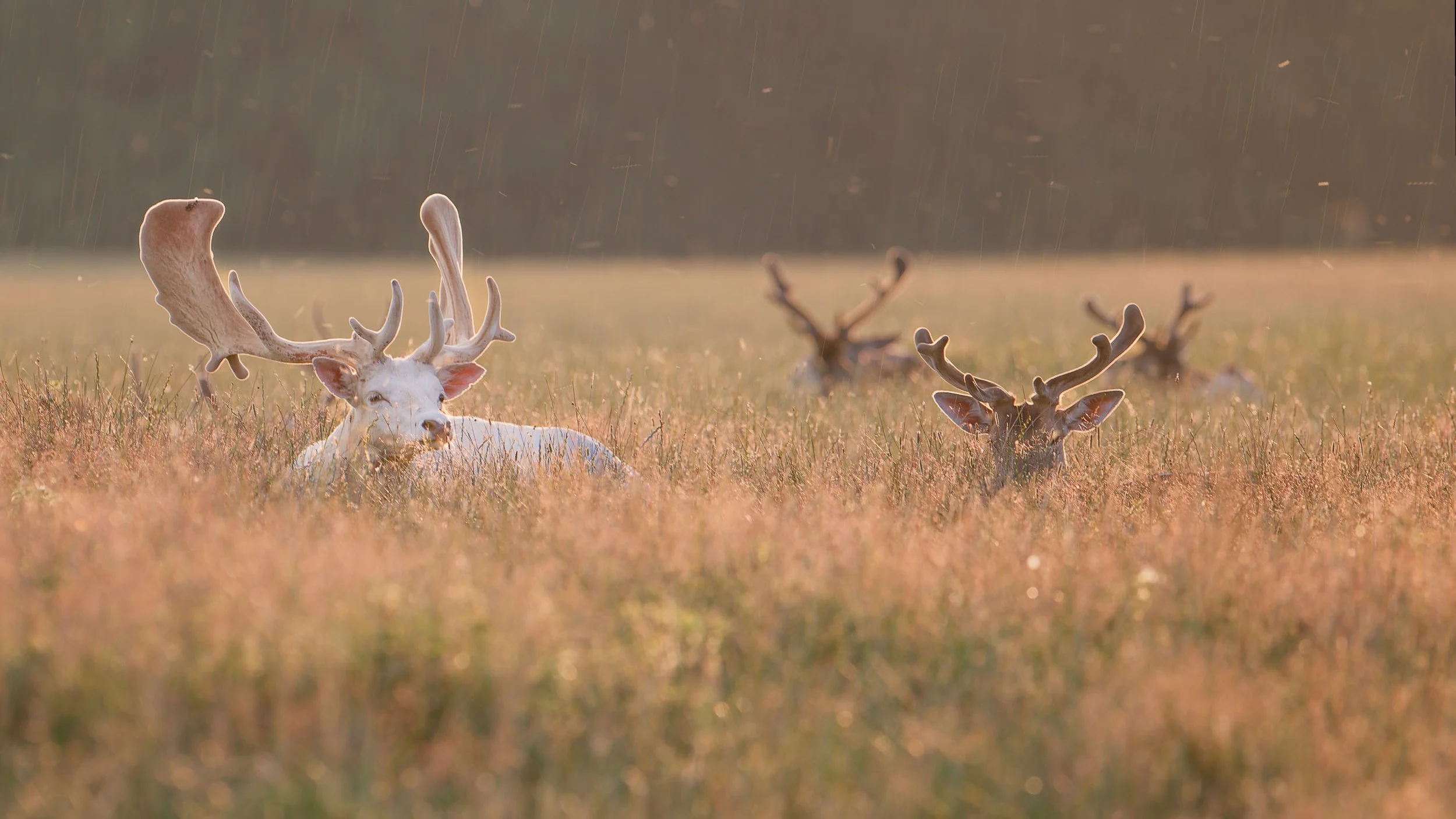
Using a prime lens, I can't do better or worse in terms of zooming.
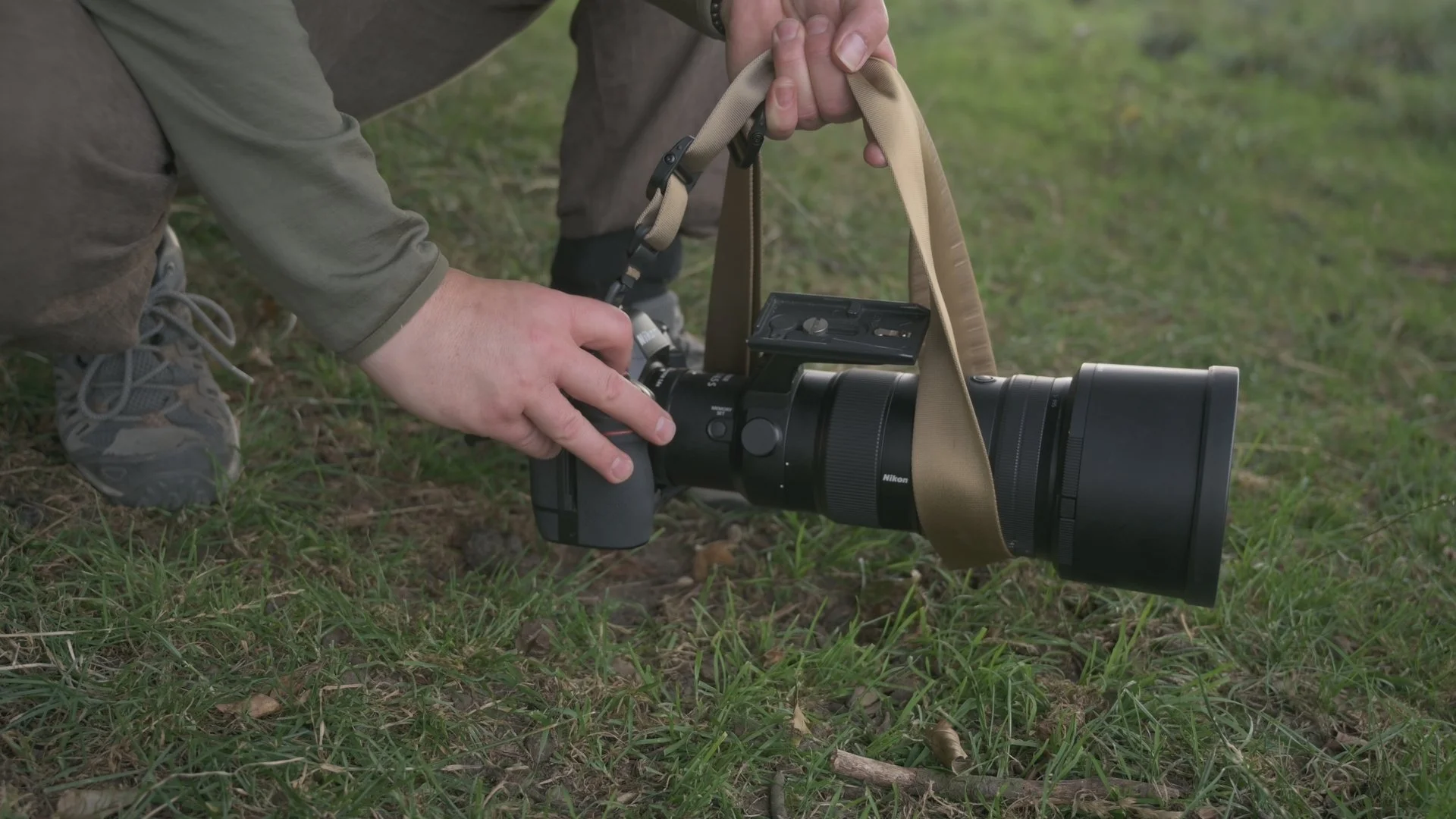
A short 2-minute light rain shower breaks the otherwise warm and breezeless evening. I decide to play with the shutter speed for a while and drop it to between 1/20s and 1/50s, trying my best to hold the 400mm lens stable. I cradle the lens in the camera strap and let it hang to avoid having my hands touch the lens directly. I only manage to get a few shots before the rain stops.
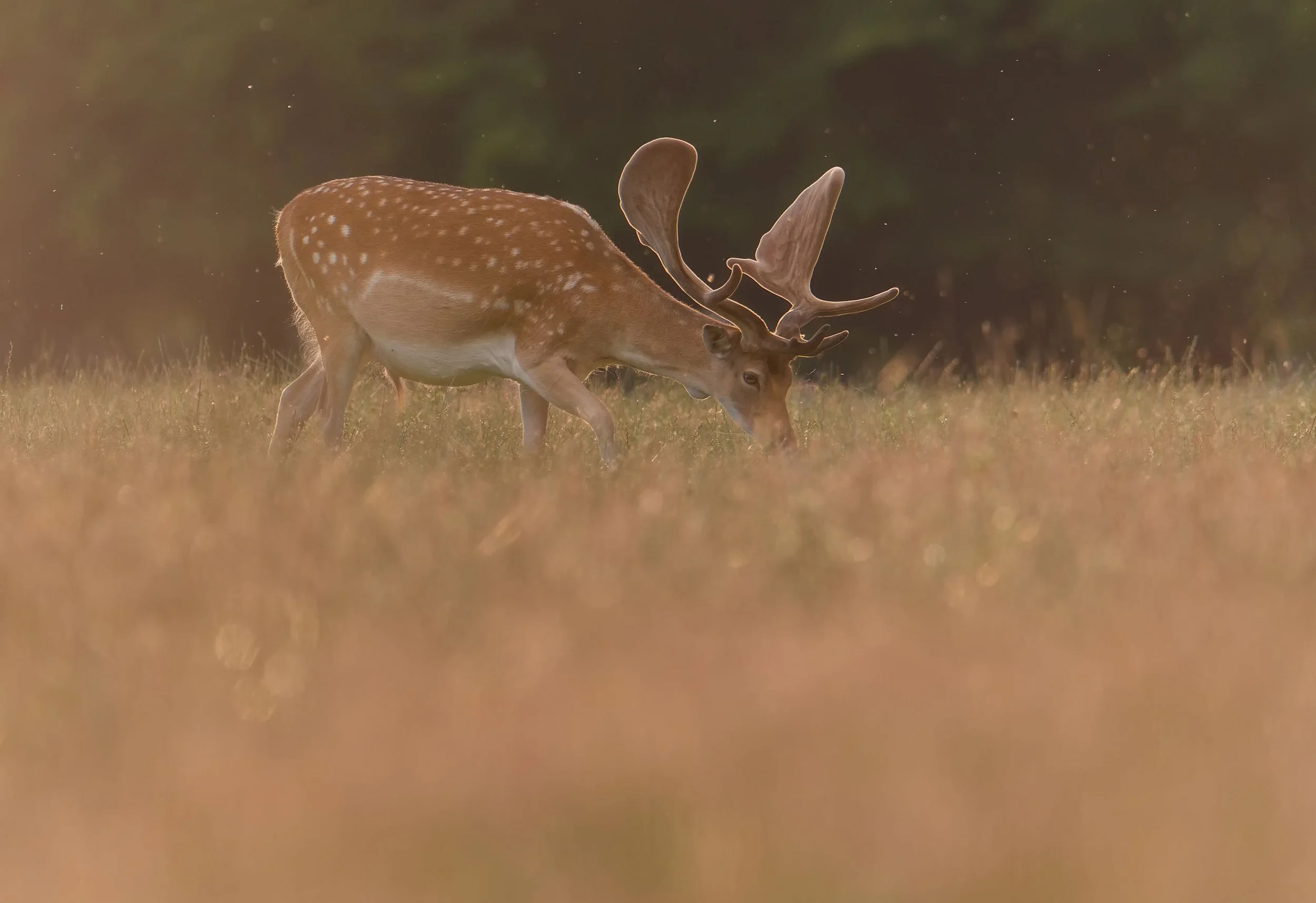
I keep the camera low enough to the ground to get the foreground just a meter in front of me at the bottom of the frame, as a out of focus abstract element. I like to keep my settings as simple as possible, so I can focus on composition. Keeping the aperture between f/4.5 and f/5.6, the background is kept out of focus as well, letting all the attention fall on the white fallow deer and the light. As usual, the camera is set to manual mode with auto-ISO. The only thing I have to change is the shutter speed, which is back at around 1/640s, which should be enough for the resting fallow deer.
The small insects keep dancing their evening dance over my head and above the fallow deer as well. The Sun illuminates the velvet antlers and even the tiny insects swirling above and in the background.
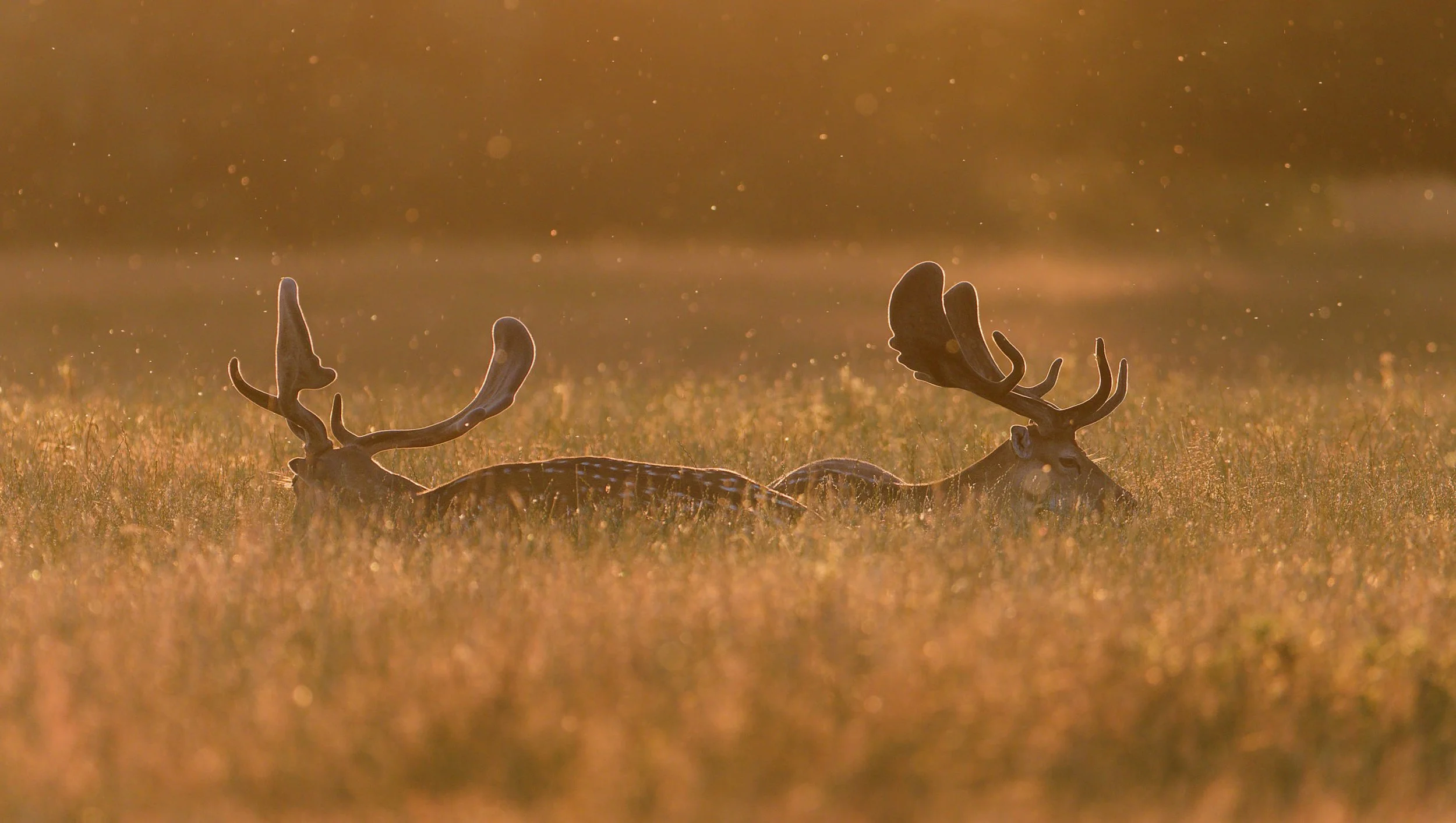
The white fallow deer lifts its head, shakes off some of the ever intrusive insect, before closing its eyes and settling its head in a slightly upward gesture. I give the trigger button a slight squeeze.
This is the moment I have been waiting for.
Not the exact pose, but any pose that can reveal some kind of emotion.
The slight upward tilt of the head gives me a sense that he is enjoying the final soft, but still warm, light rays of the setting sun. Maybe it is stretching it a bit, but looking up is, at least to humans, full of hope. Whatever he is thinking about, I don't know.
However, when we look at an image where the animal has a posture that resembles one we as humans would have when having a specific emotion. We can connect with the animal on a mental level, or experience a similar emotion by just looking at an image. That's when an image stops being a simple portrait and instead becomes a story or a vehicle for our own emotions.
The insects, despite being a constant source of irritation, end up being the element that gives many of the images I take this evening a sense of magical glow and atmosphere, as they show up as bokeh in many of the photos.
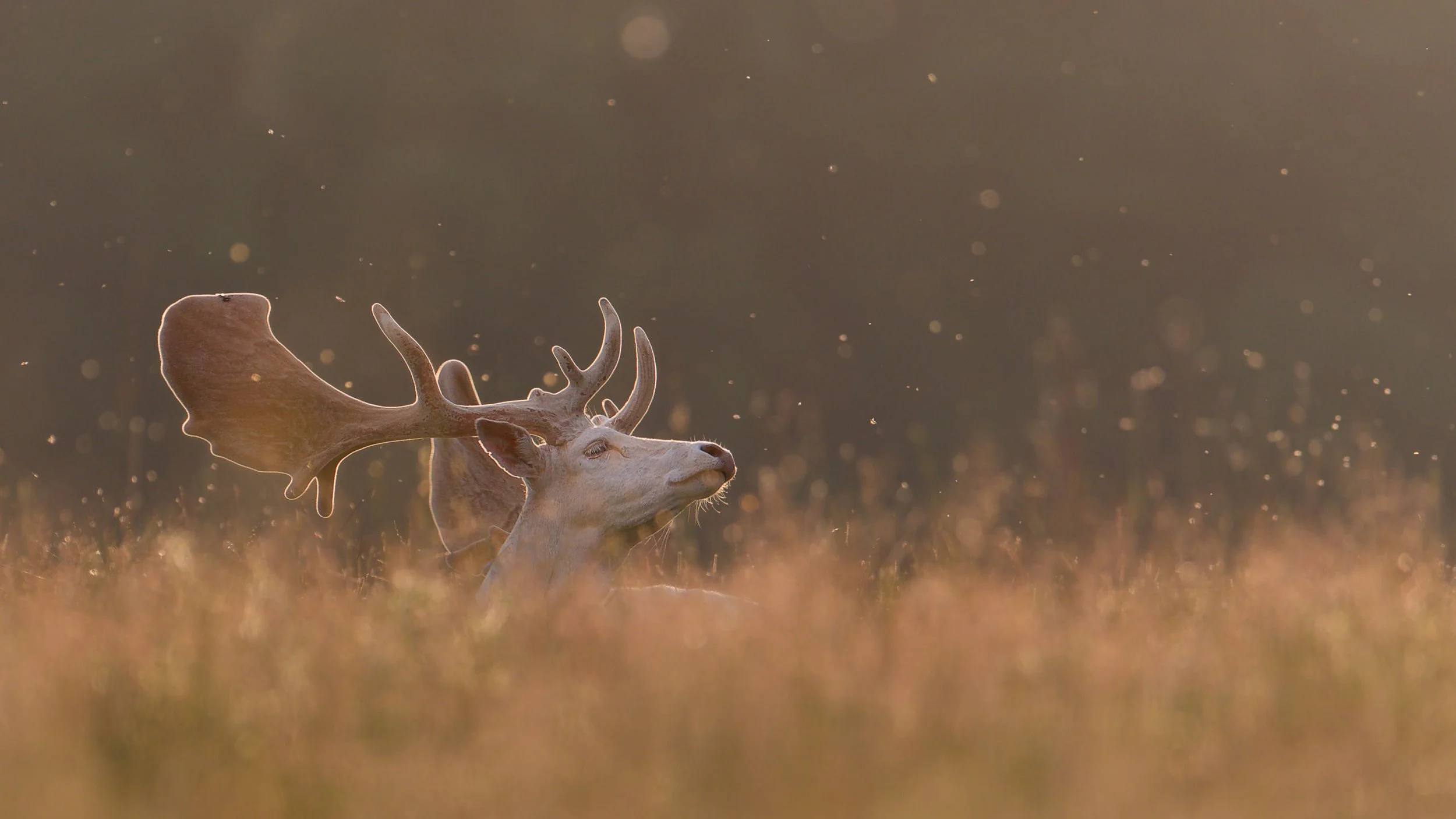
Camera/Lens: Nikon Z8 + 400mm f/4.5
Settings: 1/640s | f/4.5 | ISO 1250 (Auto)
Photography Insight: "To get the 'magical glow' of the insects, I had to position myself exactly opposite of the sun. The backlighting doesn't just illuminate the deer; it turns every hovering mosquito into a tiny light source. I underexposed by 0.7 stops to ensure the highlights in the velvet didn't blow out."